Bedding care guide
Washable Wool Comforters: How Fill and Construction Affect Care
A comforter can be made with wool and still require very different care from another wool comforter. The fiber blend, quilting, shell fabric, and manufacturer’s instructions all matter. Here’s what to check before washing—and why “washable” should never be treated as a one-size-fits-all promise.
Published October 24, 2026
Wool is often chosen for bedding because it can help manage warmth and moisture while offering a soft, resilient layer. But its natural appeal does not tell you how to clean a particular comforter. One wool-filled design may be intended for a gentle machine wash; another may call for spot cleaning, airing, or professional care. The label, not the general reputation of wool, is the safest place to start.
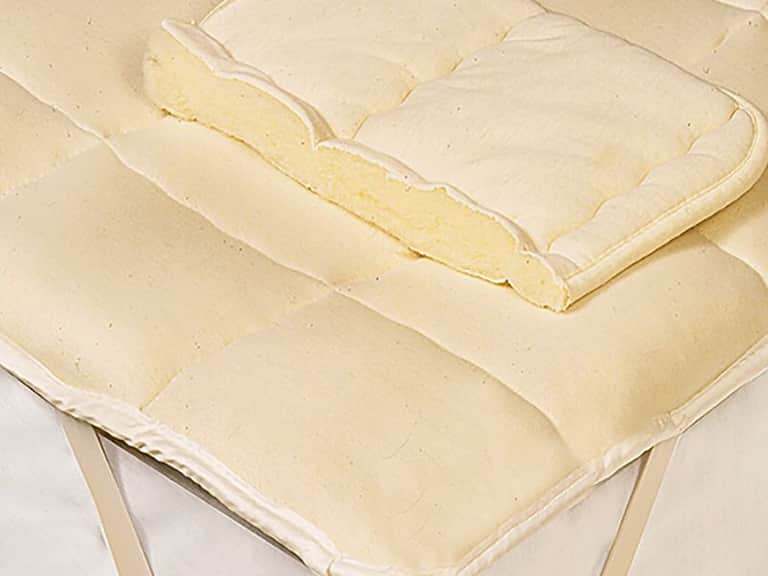
Construction helps explain why. A comforter might contain wool batting held in place by quilting, a washable wool blend, or a combination of wool and plant-based fibers. Its cover could be stitched through to the fill or designed as a separate protective layer. Each detail affects how the bedding handles movement, water, and drying.
Suite Sleep’s washable wool comforter is a useful example of a design described as suitable for gentle machine washing. Its wool fill is paired with an organic cotton sateen cover, and the cover is quilted to help keep the filling in place. Those features provide helpful context, but they do not replace the care instructions for any specific item. Even products designed to be washable need the right cycle, equipment, and drying routine.
Why “wool comforter” doesn’t tell the whole care story
The word “wool” describes a fiber, not a complete washing method. Wool fibers have a natural structure that can respond poorly to combinations of heat, agitation, and abrupt temperature changes. Depending on how the fiber is processed and how the comforter is assembled, laundering may risk shrinkage, matting, distortion, or a change in loft. Some wool bedding is treated or blended to make washing more practical; other pieces are not designed for full immersion at all.
That is why a washable wool comforter should be understood as a specific construction with specific instructions—not as evidence that all wool-filled bedding belongs in a washing machine. A care label may permit machine washing under carefully defined conditions, such as cold water and a gentle cycle. Another label may restrict cleaning to spot treatment or recommend professional care.
Even descriptions that sound similar can conceal meaningful differences. “Wool fill” might refer to wool batting, small wool clusters, or wool blended with another fiber. The shell can be quilted, tufted, or otherwise secured. A comforter with a blend engineered for repeated washing may behave differently from one filled with untreated wool batting. When details are missing, contact the manufacturer or follow the most conservative care instruction available.
For practical purposes, read the care label before considering the comforter’s material claims. Check the entire label, including any symbols or qualifications, and compare it with the product documentation. If instructions conflict, do not guess: seek clarification from the maker before washing.
Wool batting, blended fill, and the role of fibers
Wool batting is a sheet-like layer of fibers arranged to create an even cushion. In a comforter, batting may be layered inside the shell and stitched or quilted at intervals. This construction can help the comforter feel consistent across its surface, but batting still needs appropriate handling. If a care label allows machine washing, the permitted cycle and drying method remain important.
Blended fills combine wool with other fibers. Some washable comforters, for example, use a majority-wool fill with a smaller proportion of plant-based batting. The blend may be intended to improve everyday practicality, maintain loft, or help the fill withstand the specified laundering process. The important point is not to infer washability from the blend alone. A blended fill may still have restrictions, and the manufacturer’s directions should govern.
Fiber composition is worth checking when a product description uses broad phrases such as “wool blend” or “natural fill.” Look for the stated percentages and any notes about how the fill has been processed. Those details can help you understand what is inside, but they are not a substitute for direct care guidance. A label that says “machine washable” should also clarify the recommended water temperature, cycle, and drying approach.
It is equally helpful to distinguish the fill from the cover. A cotton shell may be washable while the wool core is not. Some pillows and bedding have removable covers, but many comforters are fully stitched assemblies. Never assume a clean-looking outer fabric means the entire comforter can safely be washed as one piece.
How quilting and stitching influence upkeep
Quilting is more than a decorative detail. Stitches create compartments or channels that help hold filling in position, reducing the chance that it will migrate into one corner or gather unevenly during normal use. In a comforter with a quilted shell, the thread pattern can also help maintain a more consistent distribution of warmth and loft across the bed.
Quilting does not make every comforter machine washable. It is one part of the overall construction, alongside the fiber blend, shell fabric, seams, and finishing. During laundering, a comforter is heavy and can shift as it becomes wet. If the care label permits washing, secured fill may be less prone to moving than loose fill, but overloading a machine or using an unsuitable cycle can still put strain on seams and stitching.
Pay attention to the condition of the construction before you begin. Check for open seams, loose threads, damaged edging, or an existing tear. Water and tumbling can place additional stress on weak areas. If you find damage, repair it first or ask a textile-care professional for advice. A small opening can become larger when a wet comforter is handled or spun.
Construction can also shape how a comforter dries. Dense quilting, thick batting, and large dimensions may slow drying, even when the care label allows machine washing. A comforter that feels dry on the surface can retain moisture deeper inside. Complete drying matters for freshness, comfort, and the condition of the fill, so allow enough time and follow the label’s directions rather than rushing the process.
A useful example: the Suite Sleep washable wool comforter
Suite Sleep’s washable wool comforter illustrates how fill and construction details can work together. Its description identifies super-washed wool fill, an organic cotton sateen cover, and quilting that secures the fill. The care information calls for a gentle cycle in a front-loading washer, followed by careful drying. It also recommends using a duvet cover to reduce the need for frequent cleaning.
These specifics make the example useful, but they should not be generalized to other products. Another wool comforter may use a different wool treatment, a different blend, or stitching that calls for a different approach. Even within one maker’s range, care instructions can vary between models. Check the product label and current manufacturer guidance for the exact item in your home.
The example also underscores the value of reading instructions in full. A direction to machine wash is not an invitation to use any machine, cycle, or dryer setting. Capacity, water temperature, detergent, spin intensity, and drying time can all affect how a large filled item comes through laundering. Treat each instruction as part of the care method rather than as optional fine print.
Before washing: a practical checklist
Preparation can prevent an avoidable laundry problem. Before placing a washable wool comforter in a machine, confirm each of the following:
- Read the item’s care label. Verify that the whole comforter—not only its cover—is approved for machine washing.
- Check the product-specific directions. Confirm water temperature, cycle, detergent guidance, and drying instructions. Do not rely solely on advice for a different wool item.
- Assess the washer’s capacity. The comforter must have enough room to move without being packed tightly into the drum. A washer that is too small may clean poorly and place excess strain on the item or appliance.
- Inspect seams and quilting. Look for holes, loose stitching, or areas where fill has shifted. Address damage before laundering.
- Remove the duvet cover and other detachable layers. Wash each component according to its own care label.
- Choose a suitable detergent. Follow the manufacturer’s instructions and avoid adding products the care label advises against.
- Plan the drying space in advance. A large comforter can take time to dry thoroughly. Make sure you have a safe, appropriate way to complete the process.
If the comforter fills the washer so tightly that it cannot move, stop and consider a larger-capacity machine, such as an appropriately sized laundromat washer. A professional cleaner may also be able to advise whether the item can be laundered safely. The goal is not simply to fit the bedding into a drum, but to give it enough space for the care method to work as intended.
Washing gently—and knowing when not to wash
When the care label explicitly permits machine washing, follow its specified settings. Many washable wool designs call for cold water and a gentle cycle, but those directions are not universal. If cold water or a delicate setting is specified, do not substitute a warmer wash or a more vigorous cycle in the hope of getting a deeper clean.
Use a washer that can handle the comforter without crowding. An oversized comforter may become much heavier when wet, so the machine’s rated capacity matters. Do not overload it with towels or other bulky items. A front-loading washer is recommended for some designs, including the Suite Sleep example, but that recommendation should not automatically be applied to other comforters.
Skip machine washing when the label says spot clean, dry clean, or air only. “Natural” and “washable” are not interchangeable descriptions, and a pillow or mattress pad made with wool may have very different instructions from a comforter. For localized marks, use only a cleaning approach allowed by the maker; avoid soaking the fill unless instructions say that is appropriate.
For routine freshness, laundering may not be necessary. A duvet cover acts as a removable protective layer, catching much of the everyday dust and body oils that would otherwise reach the comforter. Regular airing in a well-ventilated space may also help bedding feel refreshed when the manufacturer permits it. These habits can reduce cleaning frequency without relying on a wash that the product does not require.
Drying: the step that deserves patience
Drying is a central part of wool comforter care. If a label permits tumble drying, use only the temperature and method it specifies. Some washable wool bedding calls for low heat; another item may require air drying or a flat drying position. Follow the exact guidance, and avoid high heat unless the manufacturer clearly allows it.
Remove a comforter from the washer carefully, supporting its weight rather than pulling hard on one edge. Wet filling can be heavy, and dragging can put pressure on quilting and seams. If the directions recommend air drying, spread the comforter so air can circulate around it, and reposition it as needed. Do not store or remake the bed with bedding that remains damp inside.
Check more than the outer surface. Feel different sections, especially dense or heavily stitched areas, for lingering moisture. A comforter can seem dry at the edges while retaining dampness in the center. If the label permits additional drying, continue using the specified method. Avoid improvising with a heater or direct high heat, which can be unsafe or damaging.
Thorough drying helps preserve a comfortable, fresh-feeling bed and reduces the chance that moisture will linger in the fill. Rushing the final stage is a common mistake, particularly with bulky bedding. Build enough time into the laundry plan to let the comforter dry completely according to its instructions.
When spot cleaning and airing are the better choices
Not every bedding refresh requires a full wash. If a comforter is in good condition and has only a small mark, spot cleaning may be the appropriate choice when permitted by the label. Work conservatively, use the recommended cleaning method, and avoid saturating the fill. Test an inconspicuous area only if the manufacturer’s instructions allow it.
Airing can be a simple maintenance step between washes. Place the comforter in a clean, dry, well-ventilated area, following any guidance about sunlight or exposure. Some wool bedding can be refreshed by airing, while direct sunlight or heat may be discouraged for other items. Let the care label settle the question.
Using a duvet cover is another low-effort way to protect a comforter. Wash the cover as often as its own label recommends, and address spills promptly. A washable wool pillow protector or mattress pad does not establish how a comforter should be cleaned; each piece has its own fill, shell, and construction.
Common care mistakes to avoid
- Assuming every wool comforter is washable. Some require spot cleaning or professional care.
- Trusting the fiber description over the care label. Wool content alone does not specify a safe washing method.
- Overloading the washer. A tightly packed comforter may not move or rinse properly, and its weight can strain the machine.
- Using hotter water or a stronger cycle than directed. More intensity is not automatically better for bedding.
- Ignoring the drying instructions. High heat, an unsuitable surface, or incomplete drying can undermine the care process.
- Washing too often. A duvet cover and routine airing may help limit unnecessary laundering, when allowed by the maker.
- Applying one product’s instructions to another. A comforter, pillow, protector, and mattress pad can all have different care requirements.
Choosing a comforter with care in mind
If you are comparing bedding, care requirements deserve a place alongside weight, warmth, and feel. Look for a clear description of the fill, the shell fabric, the stitching or quilting, and the cleaning method. A product described as washable should say what that means in practical terms: machine or hand wash, water temperature, cycle, drying method, and any restrictions.
Consider your laundry setup, too. A large comforter may not fit comfortably in a home washer, even if machine washing is allowed. If you would need a laundromat or professional cleaner, factor that into the maintenance routine. The most suitable bedding is not necessarily the item with the fewest care steps; it is the one whose comfort and upkeep work for your household.
Certifications and fiber sourcing can help explain how materials were produced, but they do not indicate that an item is machine washable. Keep material credentials and laundering instructions in separate categories when evaluating bedding. One concerns sourcing or processing; the other concerns how to clean and maintain the finished product.
The bottom line on washable wool comforter care
Wool can be part of bedding that is made for gentle machine washing, but the word “wool” by itself does not promise easy care. Fill blends, wool processing, shell fabric, quilting, and overall construction all influence how a comforter should be maintained. The care label is the final authority.
Before washing, check the product-specific instructions, make sure the washer has sufficient capacity, and inspect the stitching. If machine laundering is permitted, use the recommended settings and allow enough time for complete drying. When the label calls for spot cleaning or airing instead, follow that guidance rather than risking a wash the comforter was not designed to withstand.
Suite Sleep’s washable wool comforter shows how clearly described fill and quilting can make care instructions more useful. It is an example—not a universal rule. Read the label, respect the construction, and make maintenance decisions one comforter at a time.